Who Is Responsible for Water Pipes
Water pipe ownership in Wooloowin comes down to one fitting: the meter. Urban Utilities, the network that serves the suburb, owns the street main, the service line feeding your meter and the meter itself. Everything past that point, out to the last garden tap, is yours as the owner, and repairs on that stretch are work for a licensed plumber.
If we're late, $100 comes off your bill

- Licensed and InsuredEvery job done by a licensed plumber. QBCC No: 15024607
- Fixed Quote FirstFlat-rate pricing, agreed before any work starts
- Lifetime Labour WarrantyBacked by our Fix-It-or-It's-Free guarantee (T&Cs apply)
- $0 Call-Out FeesNo extra charge for nights, weekends or public holidays
That is the short answer to who is responsible for water pipes. The split matters here more than in most suburbs. At the last census, 784 separate houses stood among the suburb's 1,699 dwellings, and plenty of the interwar ones still push water through long runs of original galvanised steel.
Old pipe means more leaks, so knowing whose leak it is saves arguments later.
Where Utility Pipes End and Yours Begin
Urban Utilities holds everything upstream of your meter, and you hold everything downstream. The pipe between the utility's network and the meter typically belongs to the utility, since it sits before the meter measures your use. The meter itself is utility property as well.
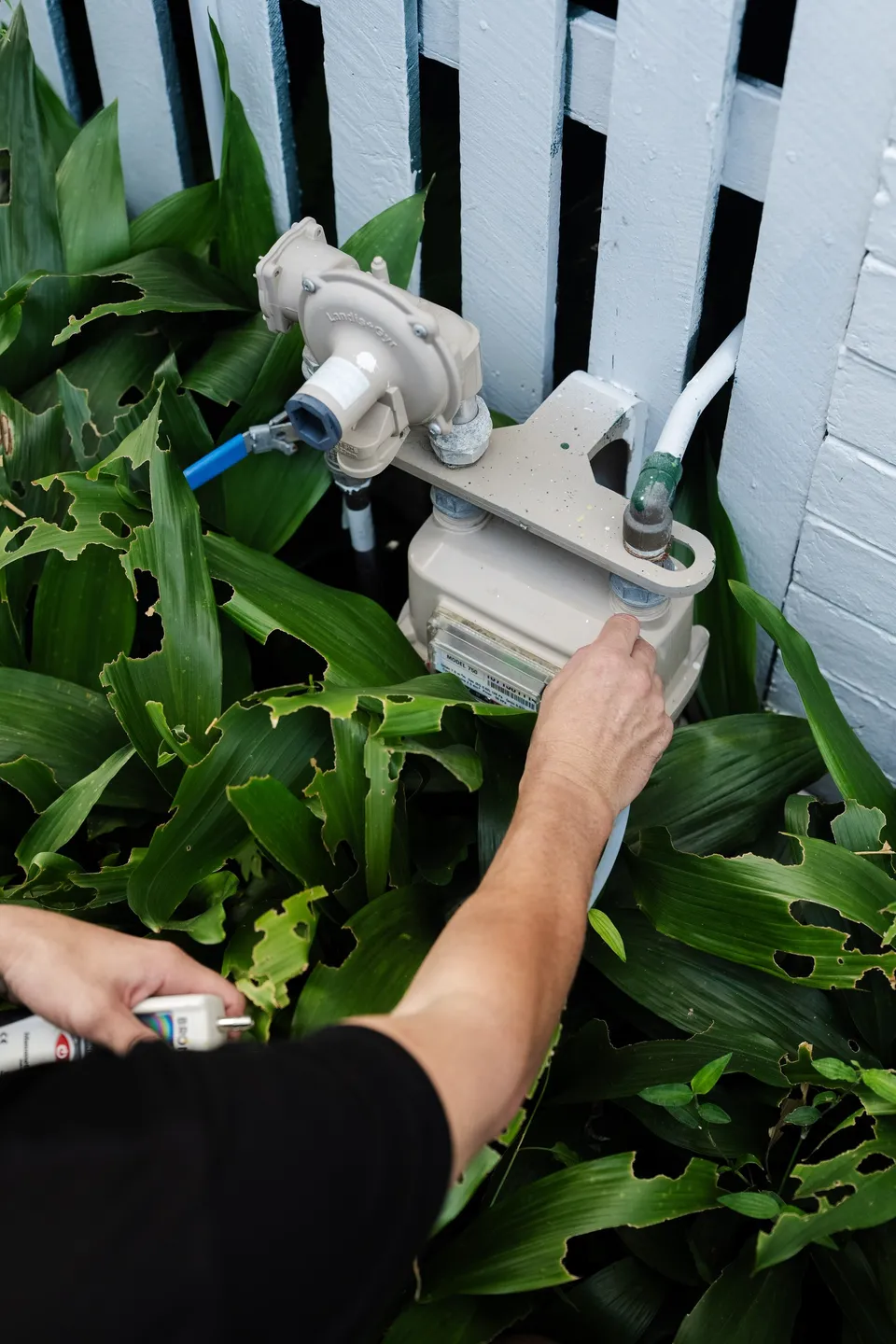
Most Wooloowin houses carry a 20 mm or 25 mm meter in a shallow box at the front boundary, level with the ground so a reader can service it without digging.
Your ownership starts the moment the pipe leaves that box. From there the supply runs under the yard, into the house and out to every tap, and all of it is yours to maintain.
Duties That Come With Owning the Pipes
Owning the pipes past the meter brings a short list of duties:
Investigate and repair
Leaks and blockages on your stretch of pipe, hidden ones included, are yours to sort out.
Use a licensed plumber
Fixing a damaged pipe ranks as minor work under Queensland rules, so a licensee carries it out, and neither a council permit nor a Form 4 applies.
Keep the meter reachable
No concrete cap, no shrubs hiding it, no planter built up around it. A ladder or a crawl space doesn't qualify as access.
Ask before changes
Any install, alteration or removal touching the meter and its pipes needs a Water Approval from the utility first.
Check before building
Lodge a request with Urban Utilities before building over or near a water pipe on your land.
The repair duty bites hardest on the big interwar allotments. A corroded joint on one of those long old services usually dampens a stretch of lawn or driveway days before the house shows anything inside. The repair bill for that patch lands with you.
Street Main, Meter and House Pipes Compared
Work inward from the street and each stretch has one caretaker:
The main under the street
The utility maintains it.
The service from the main to your meter
Typically the utility's, being on the supply side of the meter.
The meter
Utility property, serviced and renewed across the years unless an owner has altered it or boxed it in.
Everything from the meter to the fixtures
Yours, down to the last tap on the wall.
One exception redraws the map. Where a 32 mm or larger master meter can't sit close to the boundary or stay freely reachable, the utility may approve a spot inside the building. Your pipework then begins at the boundary and runs to that meter, any leak along it needs prompt attention, and ownership of the meter doesn't shift.
East of the railway line, the 816 flats and apartments the census counted bring submeters into play. Shared schemes divide those responsibilities further, though they run to their own rules.

What the Utility Does and Does Not Cover
The owner wears a hidden leak's loss, with one possible outlet. You carry primary responsibility for anything leaking past the meter, and you pay for every litre the meter records, leaks included.
A concealed leak, as the utility defines it, is water escaping where no one could reasonably notice it: below ground, under a slab, inside a wall, with nothing visibly wet to show for it. Any bill relief comes only under the concealed leak policy, never automatically.
What never lands on the utility's tab is the repair work and the pipes themselves. Our leak detection page walks through finding hidden leaks and the allowance rules.

When to Call a Plumber
Call a licensed plumber for anything past the meter, and tell the utility about faults on its own gear. The full range of work we cover across Wooloowin starts with these calls:
- Leaks, bursts or blockages in your own pipes, which a licensed plumber repairs at any hour
- A weeping meter box or a soggy nature strip out front, which sits on the utility's side
- Supply work tied to a renovation, quoted before the walls close
Water Pipe Questions From Wooloowin Homes
Call (07) 3523 7172Who owns the water pipes at my Wooloowin home?
The owner does, from the meter inwards. The street main, the service line and the meter all sit with Urban Utilities. Every pipe and fitting after that point, out to your taps, is yours to maintain.
Where does my responsibility for the water pipe start?
At the water meter. All pipework downstream of it, through to your fixtures, is the owner's to maintain. Where the utility has approved a master meter inside the building, your pipework starts at the boundary instead, and the meter remains the utility's.
Does the water meter have to stay clear of garden beds?
Yes, it does. The meter has to stay reachable for reading, servicing and swapping, so no concrete over it, no greenery in front and no planter box around it. A ladder or a tight squeeze doesn't qualify.
Can I build over a water pipe on my property?
No, not without approval. In the Brisbane council area, water and sewer infrastructure belongs to Urban Utilities, and council leaves the advice to the utility. Apply to the utility before any work begins.

Call Wooloowin Plumbing Services About Your PipesWe'll call you back.
Book on (07) 3523 7172 for plumbing anywhere in Wooloowin. We're available 24/7, there's no extra charge for nights, weekends or public holidays, and every job comes with $0 call-out fees.
To claim your $0 call-out fee, call (07) 3523 7172 today.